Article Summary: This article explains how a Molded Case Circuit Breaker (MCCB) works, why it is essential in modern electrical distribution systems, and how to select, install, and maintain it properly. It also addresses common customer pain points such as overload protection failures, incorrect sizing, nuisance tripping, and safety risks in industrial and commercial power systems.
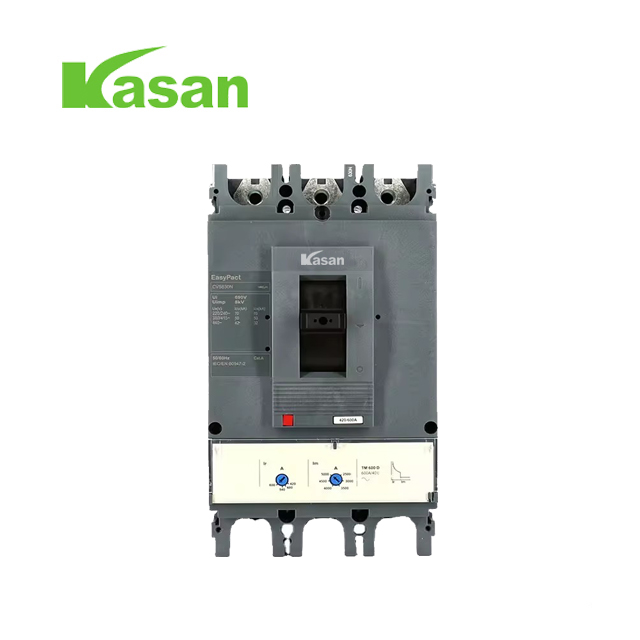
1. Overview of Molded Case Circuit Breaker
A Molded Case Circuit Breaker (MCCB) is an electrical protection device designed to automatically disconnect a circuit when abnormal conditions such as overload, short circuit, or ground fault occur. Unlike simple fuses, MCCBs can be reset and reused, making them highly efficient for industrial and commercial electrical systems.
MCCBs are widely used in power distribution panels, motor protection systems, and heavy-duty electrical installations where reliability and adjustable protection settings are required.
2. How MCCB Works
The working principle of a Molded Case Circuit Breaker is based on two key protection mechanisms: thermal protection and magnetic protection.
-
Thermal Protection: A bimetallic strip bends when excessive current flows for a prolonged time, triggering a trip mechanism.
-
Magnetic Protection: During short circuits, a high current generates a magnetic field that instantly trips the breaker.
This dual protection ensures both long-term overload safety and immediate short-circuit response. The combination allows MCCBs to protect sensitive equipment and prevent fire hazards in electrical networks.
In modern systems, adjustable trip settings allow engineers to fine-tune performance based on load characteristics, improving system stability and reducing unnecessary shutdowns.
3. Key Components Inside MCCB
An MCCB is composed of several engineered components that work together to ensure safe operation:
|
Component
|
Function
|
|
Contacts
|
Carry current and open during fault conditions
|
|
Thermal Element
|
Detects overload through heat response
|
|
Magnetic Coil
|
Instant tripping during short circuits
|
|
Arc Extinguisher
|
Suppresses electrical arc during switching
|
|
Trip Unit
|
Controls and coordinates protection response
|
Each component contributes to the MCCB’s ability to handle high current loads while maintaining safety and durability in demanding environments.
4. Advantages and Practical Value
MCCBs solve several common industrial electrical challenges:
-
Prevents equipment damage caused by overload and short circuits
-
Reduces downtime through resettable operation
-
Improves electrical system reliability
-
Offers adjustable trip settings for flexible protection
-
Handles high current applications efficiently
Compared to traditional fuse systems, MCCBs significantly reduce maintenance costs and improve operational continuity in industrial facilities.
5. How to Select the Right MCCB
Choosing the correct MCCB is critical to ensuring system protection and avoiding nuisance tripping. Key factors include:
-
Rated Current (In): Must match load requirements
-
Breaking Capacity: Ability to interrupt fault current safely
-
Trip Curve Type: Determines response sensitivity
-
Number of Poles: Based on single-phase or three-phase systems
-
Environmental Conditions: Temperature, humidity, and installation location
Incorrect selection often leads to premature failure, overheating, or unnecessary shutdowns, which are common pain points in industrial power systems.
6. Industrial Applications
MCCBs are used in a wide range of industries due to their robustness and adaptability:
-
Manufacturing plants
-
Commercial buildings
-
Data centers
-
Power distribution panels
-
HVAC systems
-
Motor control centers
In these environments, uninterrupted power and protection against electrical faults are critical for operational safety and efficiency.
7. Maintenance and Troubleshooting
Proper maintenance ensures long-term performance of MCCBs. Common practices include:
-
Regular inspection of terminals for overheating signs
-
Testing trip functions periodically
-
Cleaning dust and contaminants from housing
-
Checking mechanical wear in switching components
Common issues include:
-
Nuisance tripping due to incorrect sizing
-
Failure to trip due to mechanical wear
-
Overheating caused by loose connections
Early detection of these issues prevents costly system downtime and equipment damage.
8. MCCB vs Other Circuit Breakers
|
Feature
|
MCCB
|
MCB
|
Fuse
|
|
Current Rating
|
High (up to 2500A)
|
Low (up to 125A)
|
Varies
|
|
Reset Capability
|
Yes
|
Yes
|
No
|
|
Adjustability
|
High
|
Low
|
None
|
|
Application
|
Industrial/Commercial
|
Residential/Light load
|
Basic protection
|
This comparison highlights why MCCBs are preferred in high-load environments where flexibility and reliability are essential.
9. Frequently Asked Questions
Q1: What is the main purpose of an MCCB?
It protects electrical circuits from overloads and short circuits by automatically disconnecting power.
Q2: Can MCCB be reused after tripping?
Yes, MCCBs are designed to be reset and reused after fault conditions are cleared.
Q3: How long does an MCCB last?
Typically 10–20 years depending on usage conditions and maintenance practices.
Q4: What causes MCCB nuisance tripping?
Improper load calculation, unstable power supply, or incorrect trip settings.
About Wenzhou Kasan
Wenzhou Kasan is dedicated to manufacturing high-performance electrical protection devices, including advanced Molded Case Circuit Breakers designed for industrial reliability and safety. With strict quality control and continuous innovation, the company provides solutions that help customers improve electrical system stability and reduce operational risks.
Our MCCB solutions are engineered to meet demanding global standards, ensuring long service life and dependable protection across diverse applications.
Looking for reliable MCCB solutions for your project? Contact Wenzhou Kasan today and contact us to get professional support, technical specifications, and tailored electrical protection solutions that match your needs.